Chemical Databases
This resource page serves as a guide to accessing a wide range of chemical safety information, helping to ensure safe handling, storage, and disposal of chemicals in various professional and emergency contexts.
- PubChem - A free chemistry database maintained by the National Center for Biotechnology Information (NCBI), providing information on chemical molecules and their activities in biological assays.
- New Jersey Department of Health Fact Sheets - Offers detailed fact sheets for substances on the New Jersey Right to Know Hazardous Substance List, including health hazards and emergency procedures.
- Comparative Toxicogenomics Database (CTD) - A public database that enhances understanding of how environmental exposures affect human health, linking chemicals to gene and protein targets.
- CAMEO Chemicals - Provides information on hazardous chemicals, including their physical properties, health hazards, and protective measures.
- CDC NIOSH Chemicals - Offers comprehensive information on chemical hazards, including emergency response guidelines and safety measures.
- NIOSH Pocket Guide to Chemical Hazards - A reliable resource for quick reference of chemical hazards, exposure limits, and necessary precautions.
- NIOSH Occupational Exposure Banding - A tool for the assessment of workplace exposure limits for chemicals without sufficient toxicological data.
- NFPA Chemicals 704 - Provides the NFPA hazard identification ratings for chemicals.
- American Cancer Society Carcinogens - Lists known and probable human carcinogens and provides detailed information about each.
- ATSDR Toxicological Profiles - Detailed profiles of hazardous substances found at National Priorities List (NPL) sites, focusing on health and safety.
- TSCA Hazardous Compound Prediction Tool - A predictive tool for assessing the hazard of chemicals under the Toxic Substances Control Act.
- ToxInfo - Provides access to various databases on toxicology, hazardous chemicals, environmental health, and toxic releases.
- Inchem - Offers chemical safety information from international sources, useful for risk assessment.
- International Chemical Safety Cards (ICSCs) - Developed by the International Programme on Chemical Safety (IPCS), these cards provide hazard and exposure information from recognized sources and are available in 18 languages.
- ChemSpider - A free chemical structure database providing access to over 63 million structures, properties, and associated information.
- OECD eChemPortal - Provides global access to information on properties of chemicals, linking to reports and datasets by international government agencies.
- CAS (Pistoia Alliance) - Offers a comprehensive resource for chemical information, including substance information and regulatory data.
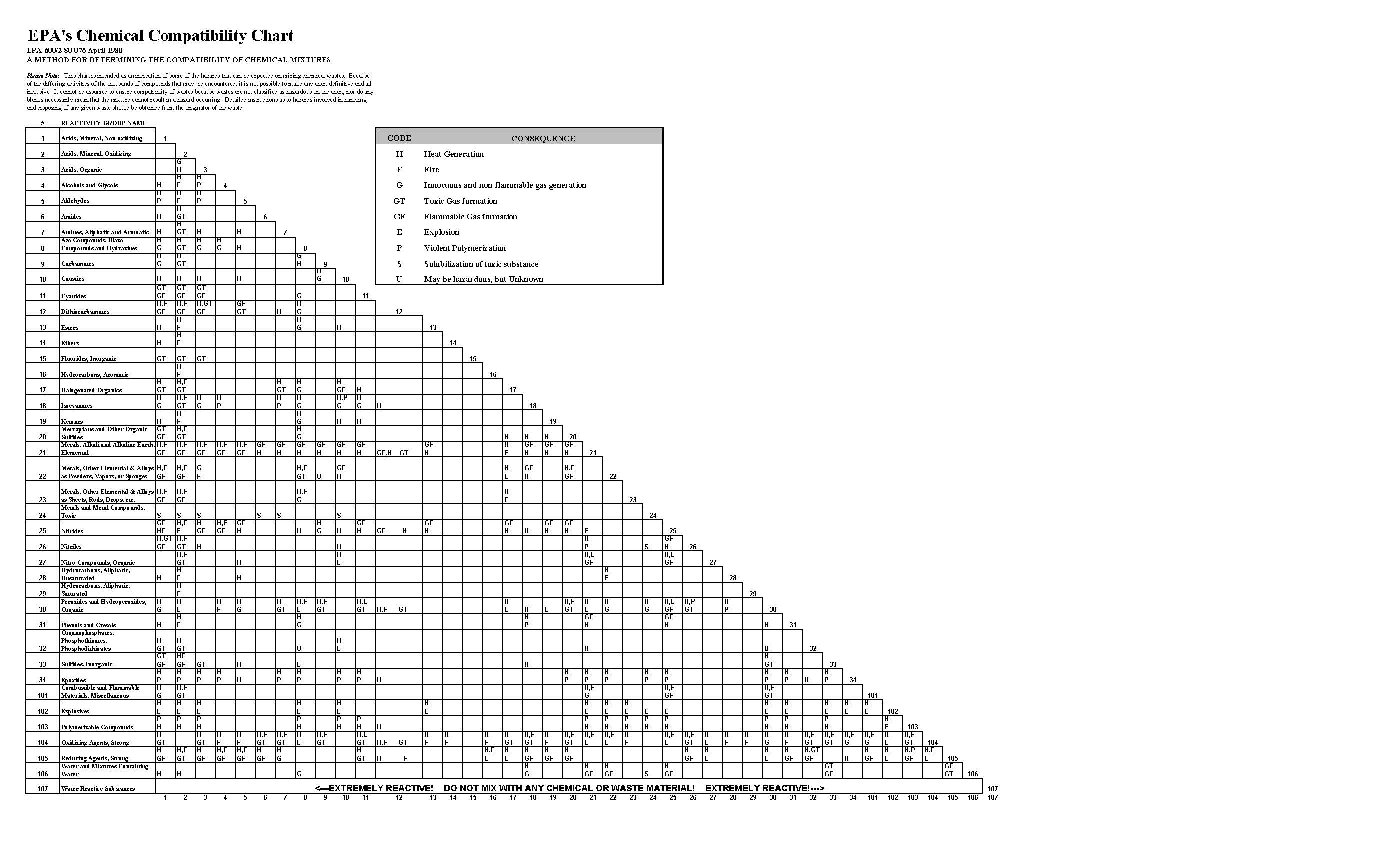
- EPA Chemical Waste Compatibility Chart - A visual tool for quickly identifying chemical compatibility for safe storage and disposal.
- ACS Hazard Assessment Tools - Provides tools and resources for assessing chemical hazards in the laboratory.
- CCPS Hazards Assessment - Offers tools for chemical hazard assessment and risk analysis.
- CHEMM Incident Management - A comprehensive resource for chemical incident management and emergency medical guidance.
- IncidentReports - Provides up to four free incident reports per month, useful for tracking and analyzing chemical incidents.
- Determining the Maximum Allowable Quantity (MAQ) of a Hazardous Material– Informational blog about MAQs by the NFPA
- ACS Center for Lab Safety - The ACS Center for Lab Safety is an initiative by the American Chemical Society that aims to promote a strong culture of safety in academic and research laboratories through education, training resources, guidelines, and fostering collaboration among stakeholders to prioritize safety practices and minimize risks associated with chemical and laboratory hazards.
- ACS Committee on Chemical Safety - The ACS Committee on Chemical Safety is a committee within the American Chemical Society that provides leadership, resources, publications, and guidance to promote a strong culture of safety across all areas of the chemical enterprise, including academic laboratories, industry, and education.
- Lab Safety Teams - Lab Safety Teams are groups of graduate students and postdoctoral researchers who work collaboratively to promote a strong culture of safety in academic research laboratories by enhancing communication, providing peer-to-peer training, conducting inspections, and fostering leadership development in laboratory safety practices.
- Lab Safety Institute Resources - The Lab Safety Institute Resources provide a wide range of educational materials, training courses, webinars, guidelines, and tools aimed at promoting a strong culture of safety in laboratories and equipping professionals with the knowledge and skills necessary to identify hazards, implement proper safety protocols, comply with regulations, and minimize risks associated with working in laboratory environments.